Living with diabetes means keeping a close eye on various aspects of your health, and this includes your vision! While you might be diligent about monitoring your blood sugar levels and maintaining a healthy diet, your eyes deserve the same attention.
A diabetic eye exam is a screening that focuses on catching vision-threatening complications that might stem from diabetes before they permanently affect your sight.
We strongly encourage people with type 1 or type 2 diabetes to have an annual diabetic eye exam along with routine eye exams.
The Diabetic Eye Exam Defined
A diabetic eye exam focuses on detecting and monitoring diabetes-related changes to your eyes, whereas a routine exam primarily checks for vision changes and general eye health.
These exams share some common elements—like vision testing and evaluating eye pressure— but diabetic eye exams examine the retina in greater detail. Why? Because your retina’s blood vessels are particularly vulnerable to damage from diabetes.
How Diabetes Affects the Eyes
Diabetes doesn’t just affect your blood sugar—it can damage blood vessels throughout your body, including those in your eyes.
Diabetic Retinopathy: The Silent Threat
Diabetic retinopathy is the most common diabetes-related eye complication and a leading cause of blindness in adults. This condition occurs when high blood sugar levels damage the small blood vessels in your retina.
In the condition’s early stages, these damaged vessels may leak fluid or blood into the retina. You might not notice any vision changes during this time, which is why regular screening is so important.
As the condition progresses, your eye attempts to compensate by growing new blood vessels. However, these new vessels are abnormal and fragile, leading to more serious complications like retinal detachment or severe vision loss without timely management.
Other Diabetes-Related Eye Conditions
Beyond diabetic retinopathy, diabetes increases your risk of developing several other eye conditions, such as:
- Diabetic Macular Edema: This occurs when fluid accumulates in the macula—the central part of your retina responsible for sharp, detailed vision. It can cause blurry or distorted central vision and may occur at any stage of diabetic retinopathy.
- Glaucoma: People with diabetes are twice as likely to develop glaucoma, a condition where increased pressure in the eye damages the optic nerve. This can lead to peripheral vision loss if left untreated.
- Cataracts: While cataracts are common as we age, diabetes can cause them to develop earlier and progress more rapidly. High blood sugar levels can cause the lens of your eye to swell and become cloudy.
Why Early Detection Matters
The value of these diabetic eye exams becomes clear when you consider that many diabetes-related eye problems develop gradually and without obvious symptoms. If you wait till you notice vision changes, significant damage may have already occurred.
Early detection through regular diabetic eye exams allows your eye care team to:
- Monitor subtle changes in your retinal blood vessels
- Identify complications before they affect your vision
- Implement treatments that can slow or prevent further damage
In other words, preventive measures are much easier to navigate than trying to reverse or cure complex concerns. Your vision is incredibly valuable, and unfortunately, we cannot restore eyesight once it is lost.
Your Guide to the Diabetic Eye Exam
Knowing what to expect during your diabetic eye exam can help you feel more prepared and comfortable during your appointment.
Visual Acuity Testing
Your exam will begin with standard vision testing to assess how well you can see at various distances. This establishes a baseline for your current vision and helps identify any changes since your last visit.
Pupil Dilation
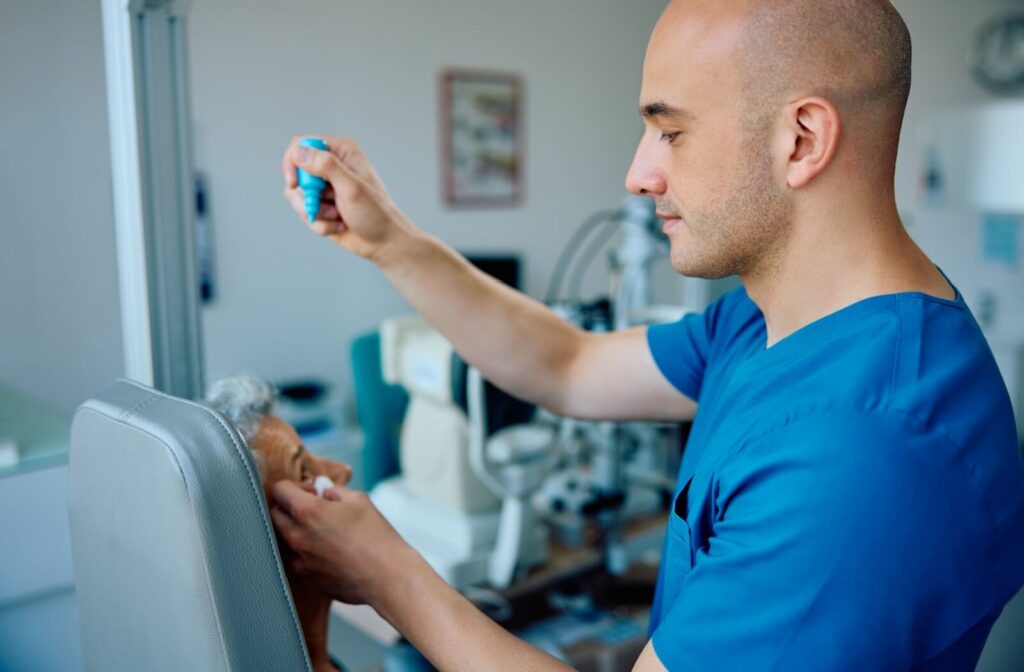
One of the most important parts of your diabetic eye exam involves dilating your pupils with special eye drops. With wider pupils, more light enters the eye, giving your eye doctor a clearer, more comprehensive view of its internal structures, making it easier to take detailed images and observe any subtle changes.
The dilation process takes about 15-30 minutes, and your pupils will remain enlarged for several hours after, before gradually returning to normal. While your vision might be temporarily blurry and you’ll be more sensitive to light (we strongly suggest bringing sunglasses to help with the sensitivity and a friend to drive you home), this step is crucial for detecting early signs of diabetic retinopathy and other complications.
Retinal Photography & Imaging
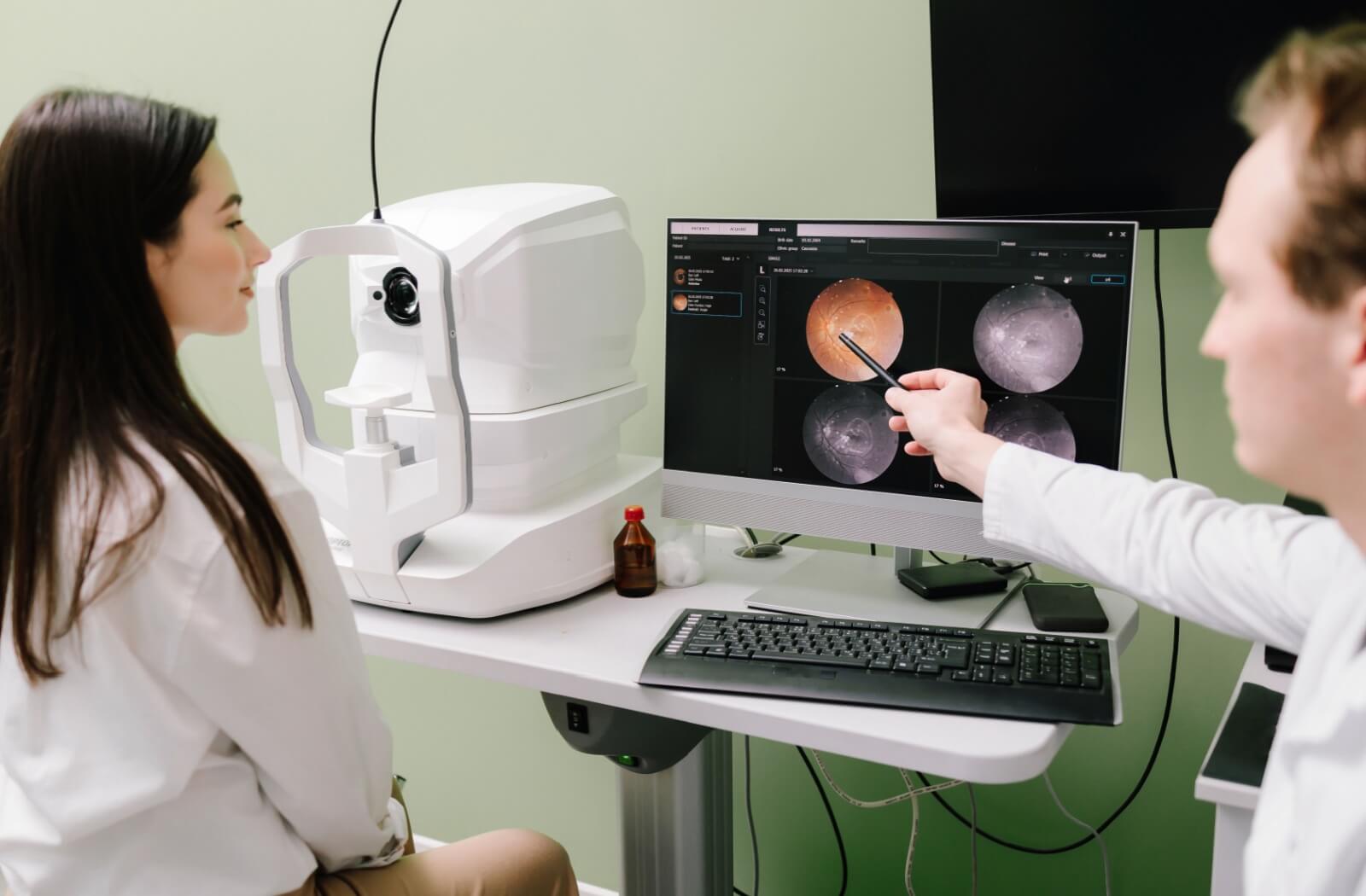
Once fully dilated, we take detailed photos and scans to document the current state of your retinal health, comparing them to previous exams to track any changes.
Fundus photos capture detailed images of your eye’s internal structures, while optical coherence tomography (OCT) goes even further—taking cross-sectional images of your retina. This helps us detect any fluid accumulation or other subtle changes that might not be visible through direct examination alone.
Intraocular Pressure Testing
We measure your eye pressure using accurate and comfortable methods such as the iCare tonometer or Goldmann applanation tonometry. This testing is an important part of screening for glaucoma and protecting your long-term vision.
Comprehensive Retinal Examination
Once we’ve taken all of your readers, your eye doctor will carefully examine your retina using an ophthalmoscope and slit lamp to look for signs of diabetic retinopathy, such as:
- Microaneurysms (tiny bulges in blood vessels)
- Hemorrhages (bleeding in the retina)
- Hard exudates (lipid deposits)
- Cotton wool spots (areas of retinal damage)
- New blood vessel growth
If everything looks solid, you’re good to go! Your eye doctor will probably want to continue with annual exams. However, if they notice any concerns, they’ll explain the findings and discuss treatment options or whether you need more frequent monitoring.
Take Control of Your Eye Health
Managing your diabetes is a fantastic way to support your overall health and wellness. But it won’t eliminate the risk of developing these sight-threatening complications, further highlighting the benefits of these annual diabetic eye exams.
If you have diabetes and haven’t had an eye exam recently, don’t wait. Contact our team at Prairie Vision in Wainwright or Vermilion to book an appointment for your diabetic eye exam today.