
If your eyes are feeling dry, scratchy, or uncomfortable, or if you’ve suddenly started to notice small shapes floating across your vision, it’s understandable that you might feel uneasy. Because dry eyes often cause blurred vision, it’s also a simple step to assume that dry eye causes floaters to appear.
The reality is that dry eye itself doesn’t directly cause floaters. Nonetheless, the 2 conditions can sometimes be interconnected due to underlying factors within the eye.
Addressing both conditions appropriately is essential to maintaining overall eye comfort and health. Floating shapes in your vision can feel more noticeable if your eyes are irritated or strained, so managing dry eye symptoms may help reduce this awareness.
What Is Dry Eye?
Dry eye syndrome, often called “dry eye,” happens when your eyes don’t produce enough tears or when your tears evaporate too quickly. Tears aren’t just about emotional moments or yawning. They’re critical in keeping your eyes hydrated and irritant-free.
What Causes Dry Eye?
Several factors can lead to dry eye, including:
- Screen time: Staring at screens for extended periods reduces your blink rate
- Aging: Tear production naturally declines as we age, especially for people over 50
- Environment: Dry climates, air conditioning, and windy conditions dry out the thin layer of tear film protecting your eyes
- Medical conditions: Issues like Sjögren’s syndrome, rheumatoid arthritis, and certain medications can also disrupt tear production.
What Are Eye Floaters?
Eye floaters are small, shadowy shapes that drift across your field of vision. They might look like spots, strings, cobwebs, or even squiggles. Floaters are more visible when looking at something bright and plain, like a clear sky or a white wall.
These pesky shapes are caused by changes in the vitreous, the jelly-like substance that fills the inside of your eye. Over time, the vitreous becomes less gel-like and starts clumping, casting shadows on your retina and creating the appearance of floaters.
Who Gets Floaters?
While floaters can happen to anyone, they’re especially common:
- After the age of 50
- People with nearsightedness
- Family history of retinal tears or detachment
While floaters are usually harmless, a sudden, significant increase in them can sometimes signal a more serious problem, like retinal detachment.
The Connection Between Dry Eye & Floaters
While dry eye doesn’t directly cause floaters, there are ways the 2 might be linked.
Inflammation & Its Effects
Both dry eye and floaters can involve inflammation. Chronic dry eye often leads to inflammation of the eye surface, which may disturb overall eye health. Though not a direct cause of floaters, prolonged inflammation can make underlying eye conditions, including pre-existing floaters, more noticeable.
Debris & Tear Film
Your tear film helps maintain clear vision by washing away debris and keeping your eyes hydrated. When dry eye disrupts the tear film, the eye’s surface may feel gritty or irritated, which some people mistake for floaters within their line of sight.
Eye Strain
Dry eyes often result in tired eyes, especially after prolonged tasks like reading or staring at a computer. Eye strain from dry eyes can sometimes make existing floaters more noticeable, especially when combined with bright lighting or digital screens.
While these connections don’t mean that dry eye directly leads to floaters, managing dry eye symptoms can reduce strain and inflammation, potentially minimizing discomfort caused by both conditions.
How to Manage Dry Eye
Managing dry eye involves lifestyle changes, treatments, and proactive care to restore eye moisture and reduce discomfort.
Stay Hydrated & Eat a Healthy Diet
One of the most straightforward ways to deal with dry eye is to stay hydrated by drinking plenty of water throughout the day. Dehydration can exacerbate dry eye symptoms, so maintaining proper hydration is key. Additionally, incorporating omega-3 fatty acids into your diet by eating foods like salmon, flaxseeds, or walnuts may help improve tear quality.
Manage Your Environment
Environmental factors also play an essential role. Avoid places with excessive air conditioning, strong winds, or dry air, and consider using a humidifier to add moisture to the air in your home or office.
When working on digital screens or reading for extended periods, follow the 20-20-20 rule—every 20 minutes, take a 20-second break to look at something 20 feet away.
Lubricating Drops
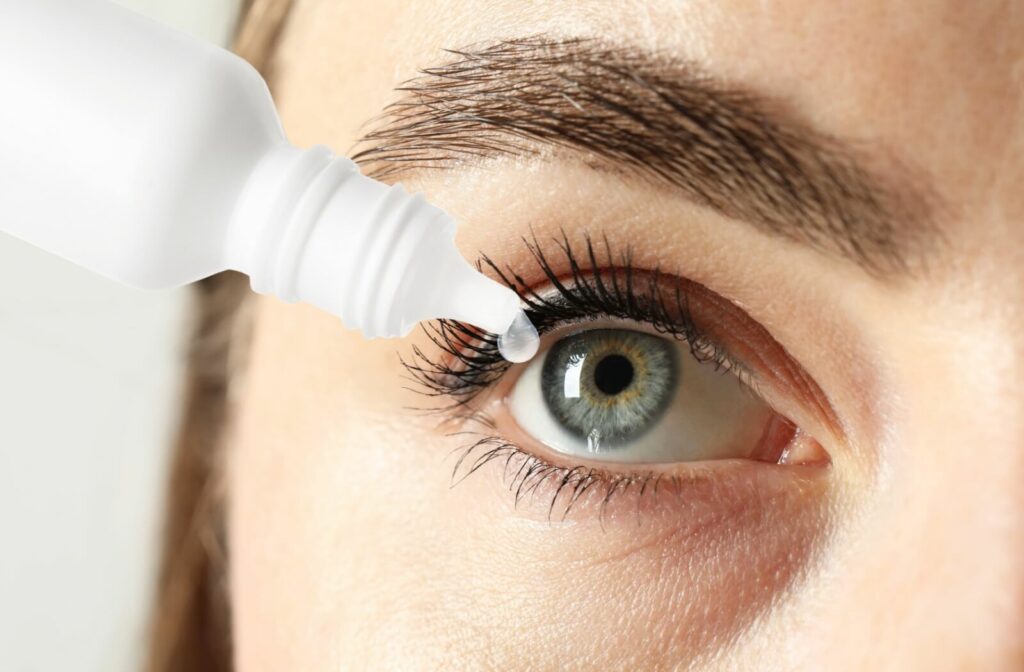
Artificial tears or lubricating eye drops can immediately relieve dry eye symptoms. For long-term use, we recommend a preservative-free formula to reduce the risk of irritation from the eye drops.
Professional Treatment
For more persistent cases, consult your eye doctor for tailored advice. We may recommend medicated eye drops, punctal plugs, or other treatments tailored to your needs. We may also suggest prescription anti-inflammatory medications if inflammation is a contributing factor.
Taking these steps can help you manage your symptoms, maintain comfort, and protect your vision in the long term.
How to Manage Floaters
If your floaters are not a sign of a serious condition, like retinal detachment, they don’t always require medical treatment. Many floaters become less noticeable with time as your brain adjusts. But if they bother you, here are a few tips:
- Avoid bright screens: Switch to darker backgrounds when working.
- Eye exercises: Try rolling your eyes in smooth circles to move floaters out of view temporarily.
- Stay hydrated: Drink plenty of water to support overall eye health.
If you notice a sudden increase in floaters or accompanying light flashes, visit your eye doctor immediately.
Seeking Professional Help
If dry eye or floaters interfere with your quality of life, seeking professional help can make a difference. We can assess your symptoms, provide targeted treatments, and rule out severe conditions.
Regular eye exams are essential for monitoring overall eye health and keeping you comfortable, regardless of whether you have dry eye, floaters, or both. Whether you’re looking to soothe dry eyes or learning to ignore pesky floaters, the key is paying attention to your eye health and seeking guidance when needed.
Call our experienced team at Prairie Vision today to book an appointment!